The Fuji Factor: Seeing the Big Guy Without the Big Stress
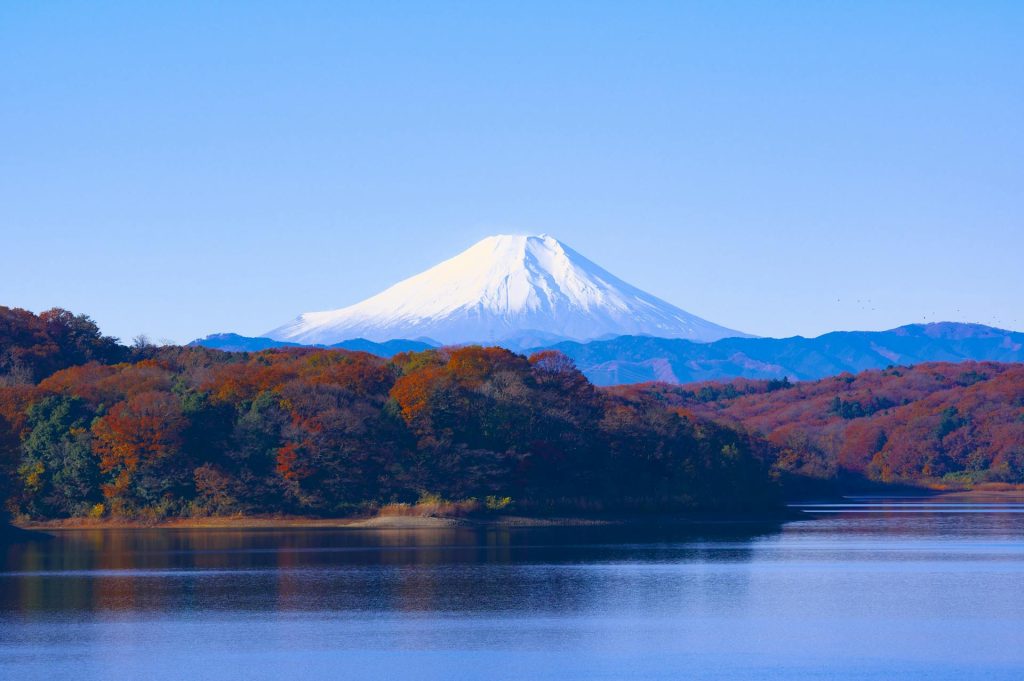
Let’s talk about the literal mountain in the room: Mount Fuji. It is the undisputed heavyweight champion of Japanese landmarks. However, Fuji is a bit of a diva; it spends about 60 percent of its time hiding behind clouds like a celebrity avoiding the paparazzi.
Pro Tips for Fuji Chasers:
- View from the Window: If you are taking the Shinkansen (bullet train) from Tokyo to Kyoto/Osaka, book a Seat E. This is the side of the train that offers a spectacular view of the mountain as you whiz by at 300 km/h.
- The “Anti-Climb” Strategy: Unless you are a dedicated hiker, you do not necessarily need to climb Fuji to appreciate it. In fact, you cannot see the mountain when you are on it. Head to Lake Kawaguchi or Arakura Sengen Park for that iconic postcard view of the Chureito Pagoda framing the peak.
- Crowd Management: In 2026, the Japanese government has introduced new hiker caps and entry fees for the popular Yoshida Trail to combat overtourism. If you plan to summit, you must book your entry slot well in advance through the official online portal.
Researching Like a Pro: How Not to Be a Clueless Tourist
Gone are the days when you could just “wing it” in Tokyo. These days, a successful Japan trip requires a research phase that would make a PhD student proud. Here is how to navigate the planning stages without losing your mind.
1. Master the “Golden Window” of Booking
In Japan, the best experiences disappear fast. Many high-end restaurants and popular attractions like the Ghibli Museum or the Shibuya Sky observatory open their booking windows exactly 30 days (or sometimes three months) in advance at midnight Japan time. Set your alarms, or you will be left with the 4:00 PM Tuesday slot when the lighting is terrible.
2. The JR Pass Dilemma
The legendary Japan Rail Pass underwent a massive price hike recently. Do not just blindly buy one. Use an online JR Pass Calculator to see if your itinerary actually justifies the cost. If you are only visiting Tokyo and Kyoto, you are likely better off buying individual tickets or using an IC card like Suica or Pasmo.
3. Essential Tech for Your Pocket
Do not rely on your home data plan; it will be slow and expensive. Order an eSIM before you land. You will also need these three horsemen of the Japanese apocalypse:
- Google Maps: It is surprisingly accurate for train platform numbers and “exit” directions, which are life-savers in the labyrinth that is Shinjuku Station.
- Google Translate: Use the “Camera” feature to translate menus. Trust me, it is the difference between ordering a delicious katsu and a bowl of unidentified offal.
- PayPay or IC Cards: While Japan is becoming more digital, cash is still king in small temples and rural shops. Always keep a few 1,000 Yen notes in your wallet.

Cultural Etiquette: Avoiding the “Gaijin Smash”
Japan is a society built on subtle rules. You do not have to be perfect, but showing effort goes a long way. The Golden Rule: Observe and mimic.
“If everyone else is whisper-quiet on the train, put your headphones on. If there is a line for the elevator, do not be the one who cuts. And for the love of all things holy, do not tip.”
Tipping is not just “not expected”—it can actually be confusing or offensive to staff. They will likely chase you down the street to return the money you “forgot.” Save your extra cash for the Konbini (convenience store) runs. Speaking of which, the egg salad sandwiches at 7-Eleven are not just food; they are a religious experience.
Final Thoughts for 2026
Japan is popular for a reason. It is safe, clean, incredibly delicious, and feels like stepping into a version of the future that still respects its past. Yes, it is crowded. Yes, you will get lost in a train station at least once. But when you are standing under the neon lights of Osaka or the cherry blossoms in Kyoto, you will realize that the research was worth every second.